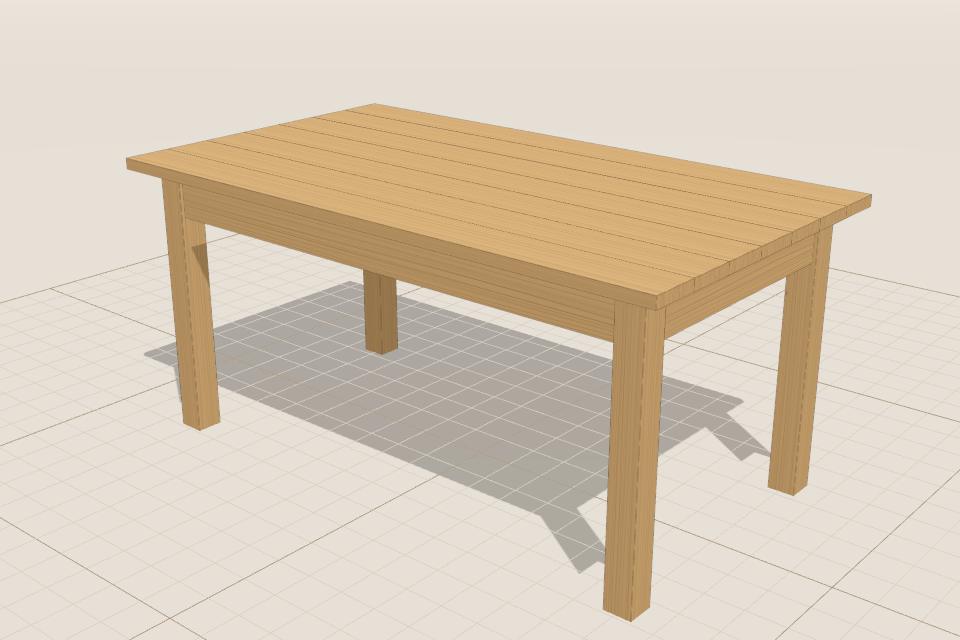
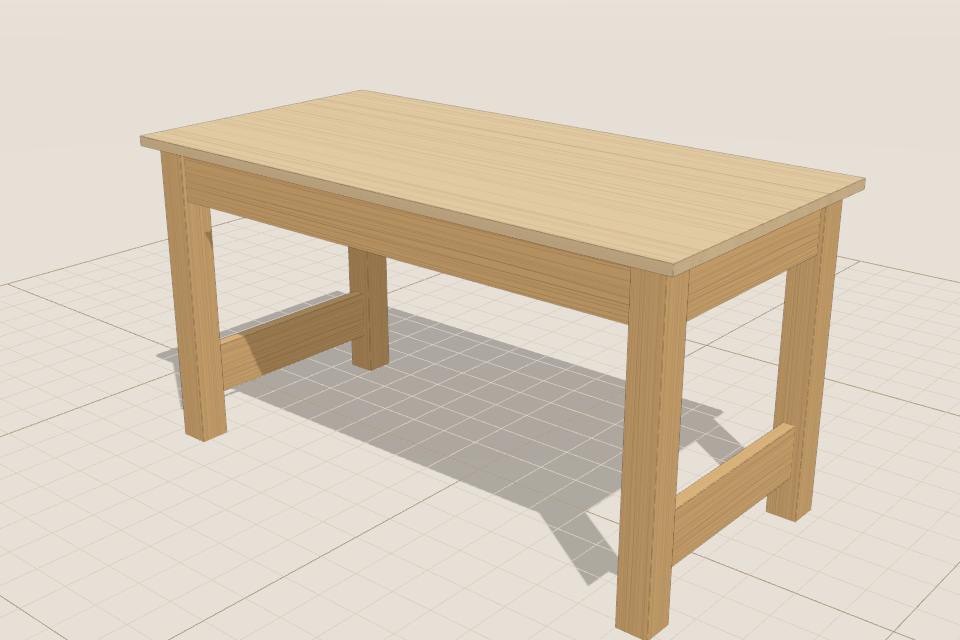
Workbench plans checked for hammering and planing
Size a workbench to your shop and your height, and Woodworker checks it stays put when you plane, saw and hammer on it.
Open the workbench designerFree · no sign-up · works in your browser
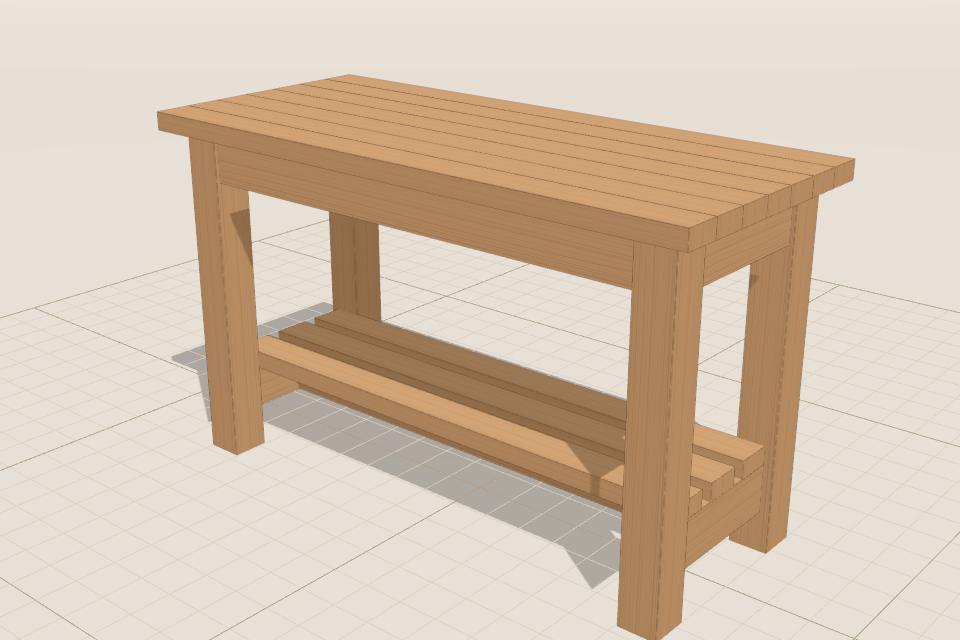
How the design works
A thick top on chunky legs, with an H-frame of stretchers and a slatted shelf for tools underneath.
Starts at 1.5 × 0.65 m, 900 mm high (60 × 26 in in US sizes). Change any size and everything else follows.
What Woodworker checks
- The top bending under heavy loads and hammering
- Racking when you plane or push along the bench
- Legs and joints at the corners
When something isn’t strong or stable enough, it says why and offers a fix you can apply in one click, like a bigger section, an extra brace or a different joint.
What you can change
- Length, width and height
- Top thickness and leg size
- Stretchers and the tool shelf
What you get
- A cut list of every part, with sizes, wood and how many
- A shopping list of timber lengths or sheets, screws, bolts and hardware, with rough costs
- Assembly steps in build order, with the joints and fixings for each step
- Dimensioned front, side and top drawings, and a printable workshop sheet (PDF)
Tips
- A good working height is about where your palms are with your arms hanging down.
- Weight helps: a heavy bench moves less when you plane.
Questions
- Can I add a vice?
- Leave room at one end: the plans show the top and frame, and you can widen the overhang for a vice.
- Is it really free?
- Yes. Woodworker is free, with no ads and no account. Designs are saved in your browser and never uploaded.
- How accurate are the checks?
- They use Eurocode 5 methods and common furniture test loads, as a guide for home-made projects, not certified engineering. Ask an engineer about anything large or anything people could be hurt by if it failed.